
From Codfish to Philosophy/Merluzzi e filosofia
Pamela Hall and the radical act of taking things apart to create knowledge/Pamela Hall e il gesto radicale del disfare per generare conoscenza (EN/IT)


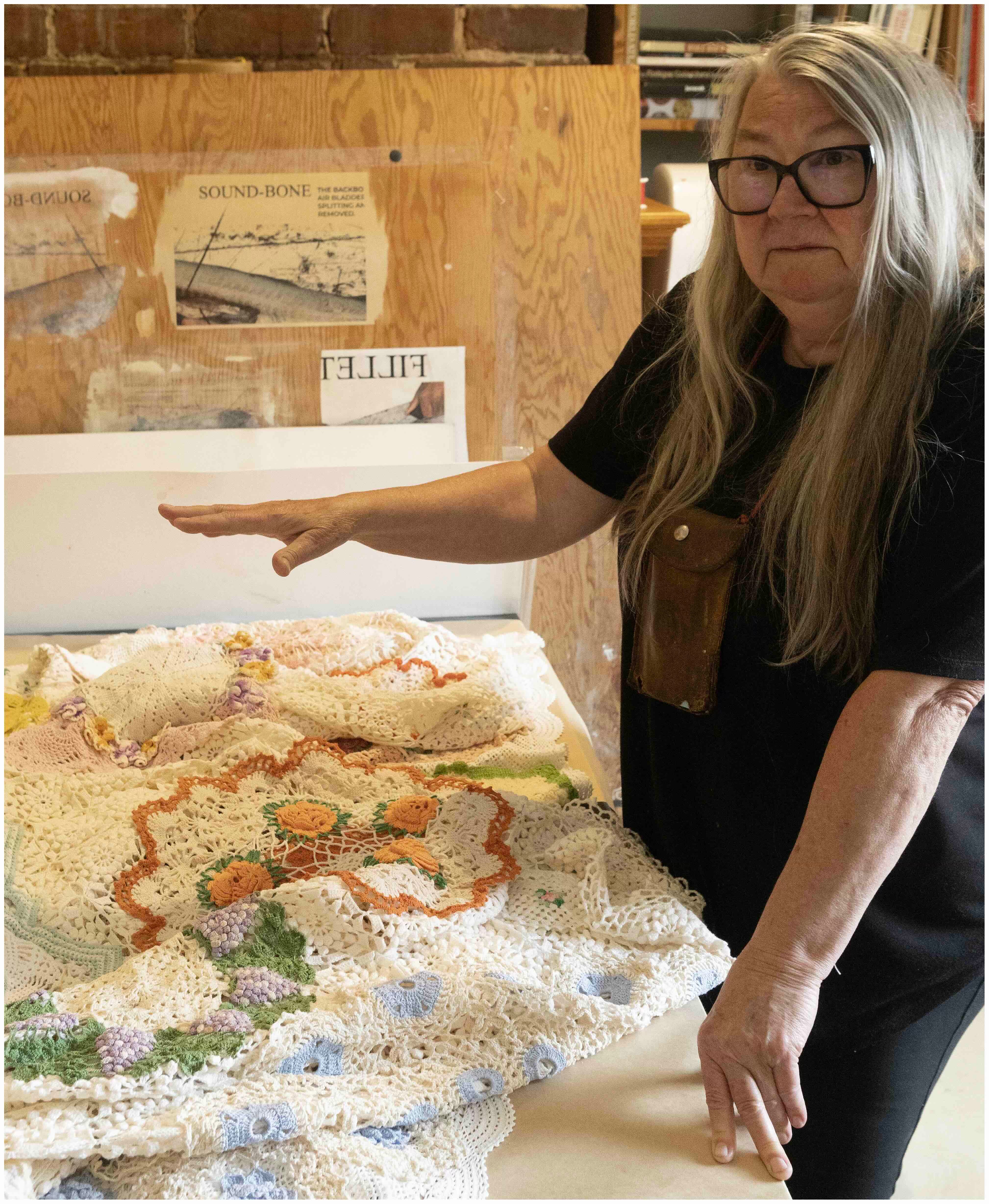
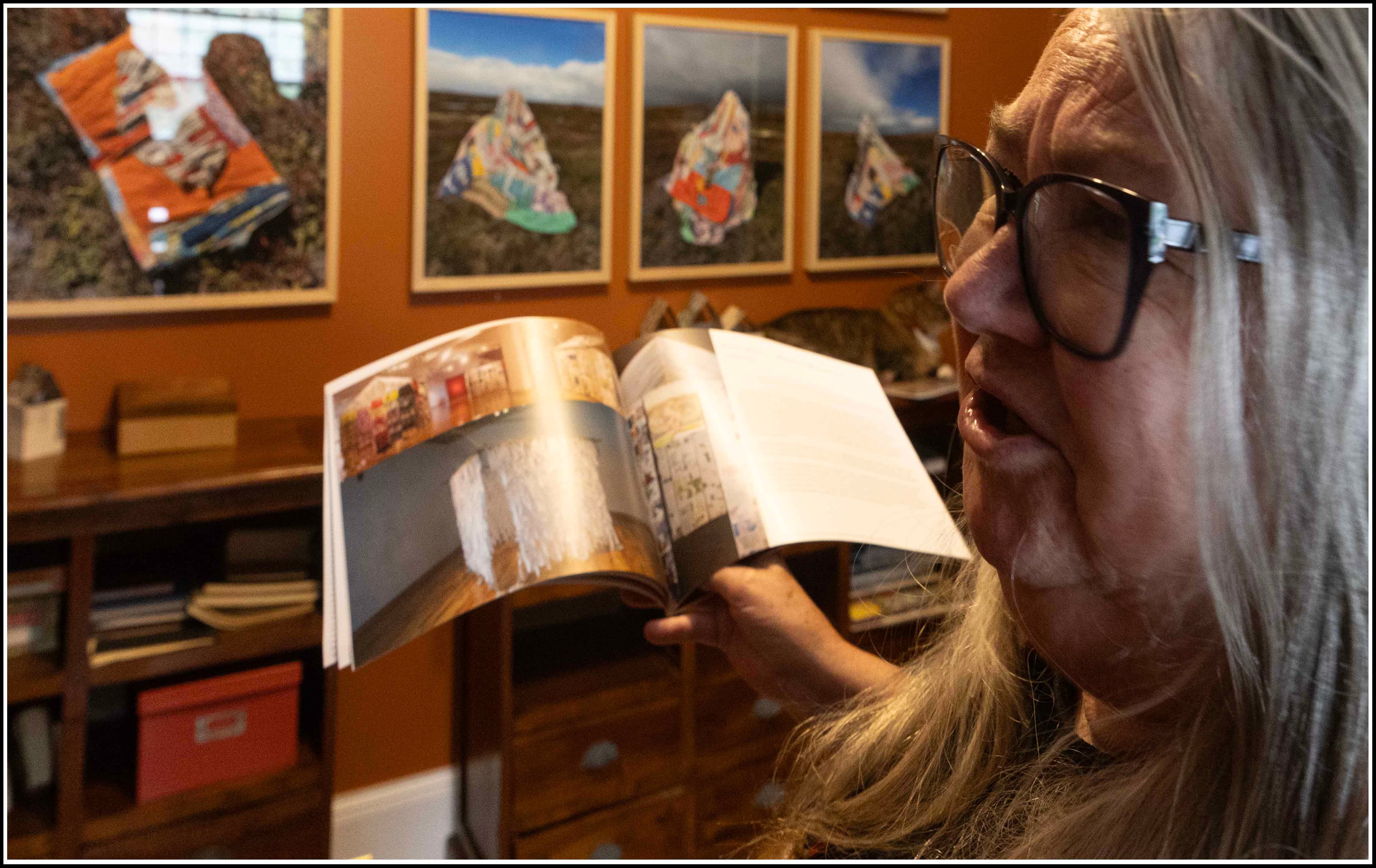
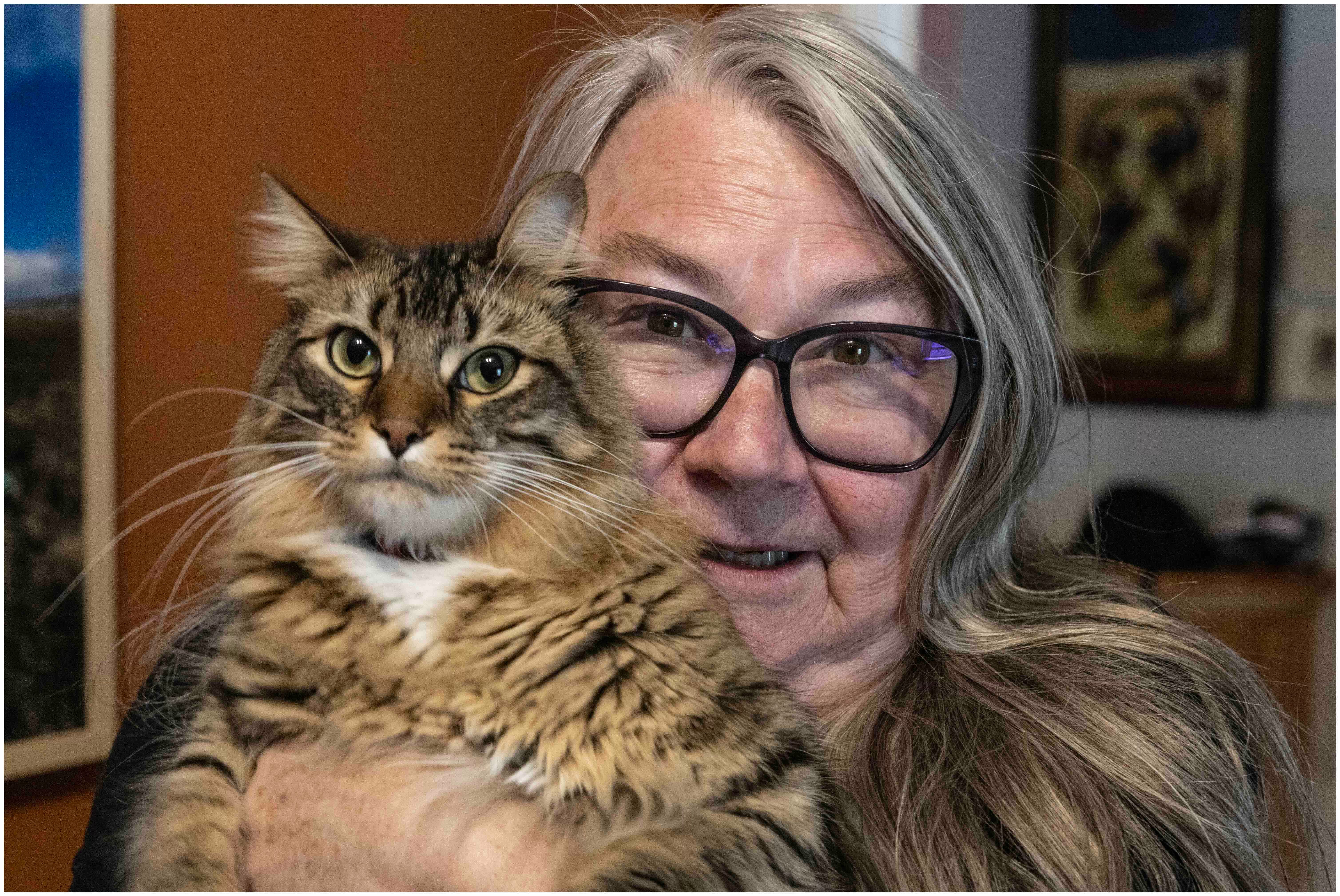
Summer sunlight streams into the third-floor studio of an old house in St. John’s. Outside the window, the garden is in full bloom. Pamela Hall, one of Newfoundland’s most original artists, holds a seam ripper in her hand, one of those small sewing tools used to undo stitches.
Unstitching the world as a creative act
Around her lie piles of aprons, embroidered tablecloths, flour sacks, and unfinished quilts. Pamela moves slowly from one piece of fabric to another. She unstitches. She separates. She carefully preserves every fragment. Each piece will eventually become part of something else.
The practice began during the pandemic. That was when she took sixty-four cod-shaped flour sacks, sewn decades earlier for another art project, and started taking them apart. Stitch by stitch. Square by square. “While everyone else was baking sourdough bread,” she says with a laugh, “I was undoing something that had already been made.”
For Pamela, unmaking is not destruction; it is a way of questioning the world. For more than forty years, her work has centred on understanding how knowledge emerges through remembering, recovering, deconstructing, and rebuilding. For her, memory is not something that is preserved. It is something that is made.
Who decides what counts as knowledge?
“Who decides what knowledge is, and who has the right to produce it?” This question has long run through Hall’s work. “I am a feminist,” she says. “I am frustrated by centuries of definitions of knowledge created by men, and by the assumption that knowledge must exist in textual form.”
Her critique has never been merely theoretical. Throughout her career, Hall has developed an alternative way of producing knowledge—one rooted in visual culture, lived experience, collaboration, and manual labour. For her, art and research are inseparable. “It’s my way of investigating,” she explains. “It’s how I examine the world and how I arrive at conclusions. And when I discover something I think is meaningful, I give it back to the world.”
This approach also explains why Hall has never allowed herself to be defined by a single medium or a linear career path. She never begins with an art form. She begins with the people she wants to reach. “If I want to speak to women facing surgery, I make a film,” she says. “If I want to talk to children about the environment, I write a children’s book.”
The result is a remarkably diverse body of work that includes films, public installations, encyclopedic research projects, textile works, performances, community collaborations, and books. Yet despite the variety of forms, a single thread connects them all: making knowledge accessible, shared, and grounded in lived experience.
From codfish to philosophy
Many of Hall’s most important projects emerge from years—and sometimes decades—of patient observation and field research.
In the 1990s, she spent four years working aboard inshore cod-fishing boats, documenting the lives of Newfoundland communities devastated by the collapse of the fishing industry.
“It’s one thing to lose your job,” she reflects. “It’s another thing to lose your way of life.”
Out of that experience came one of her best-known works, Reseeding the Dream.
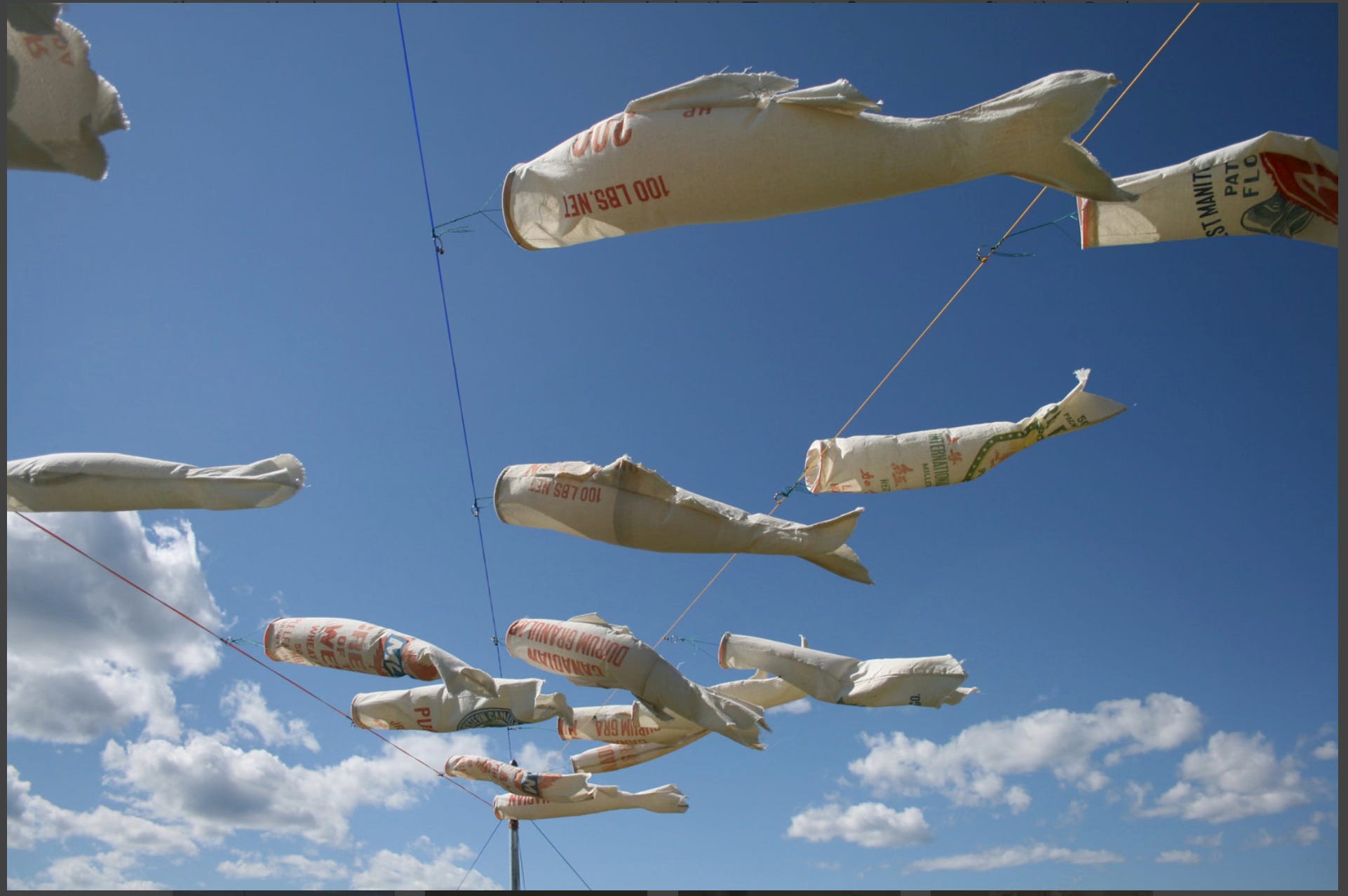
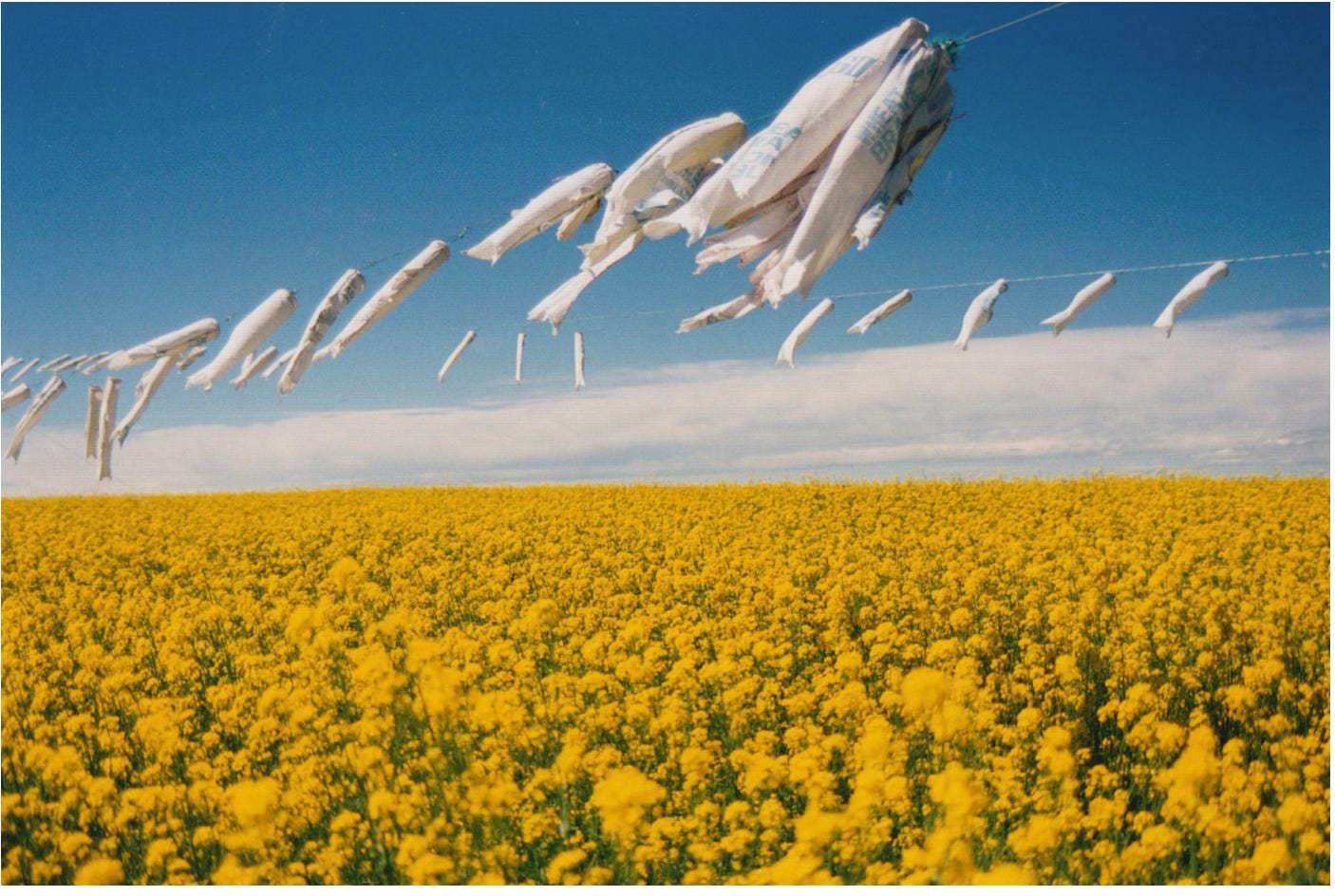
Created in 1997, the project involved flying 150 cod-shaped flour sacks over Alberta wheat fields. Drawing on the biblical imagery of the loaves and fishes, Reseeding the Dream became a symbolic bridge between Newfoundland’s fishing crisis and the grain-growing culture of the Canadian Prairies.
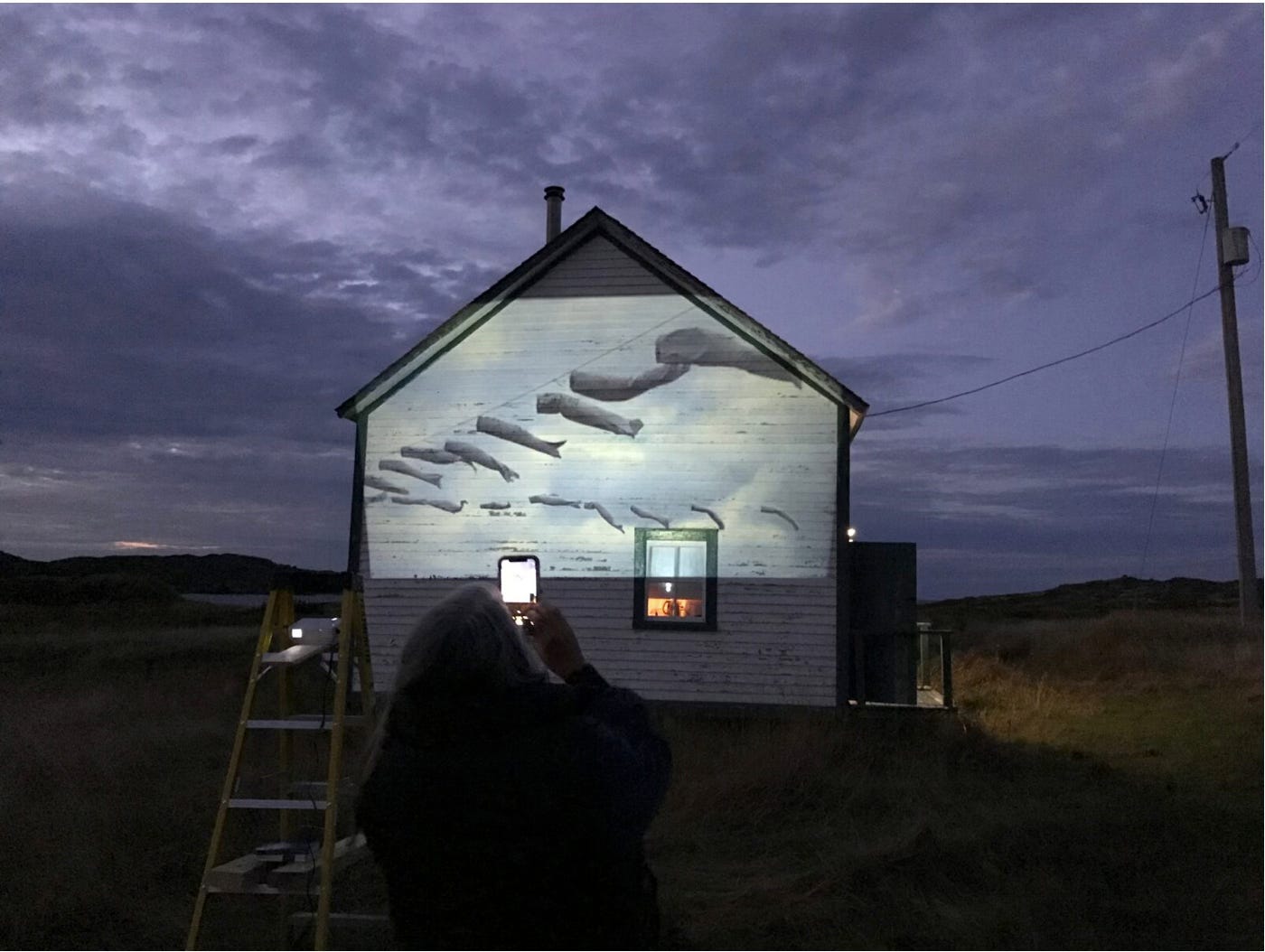
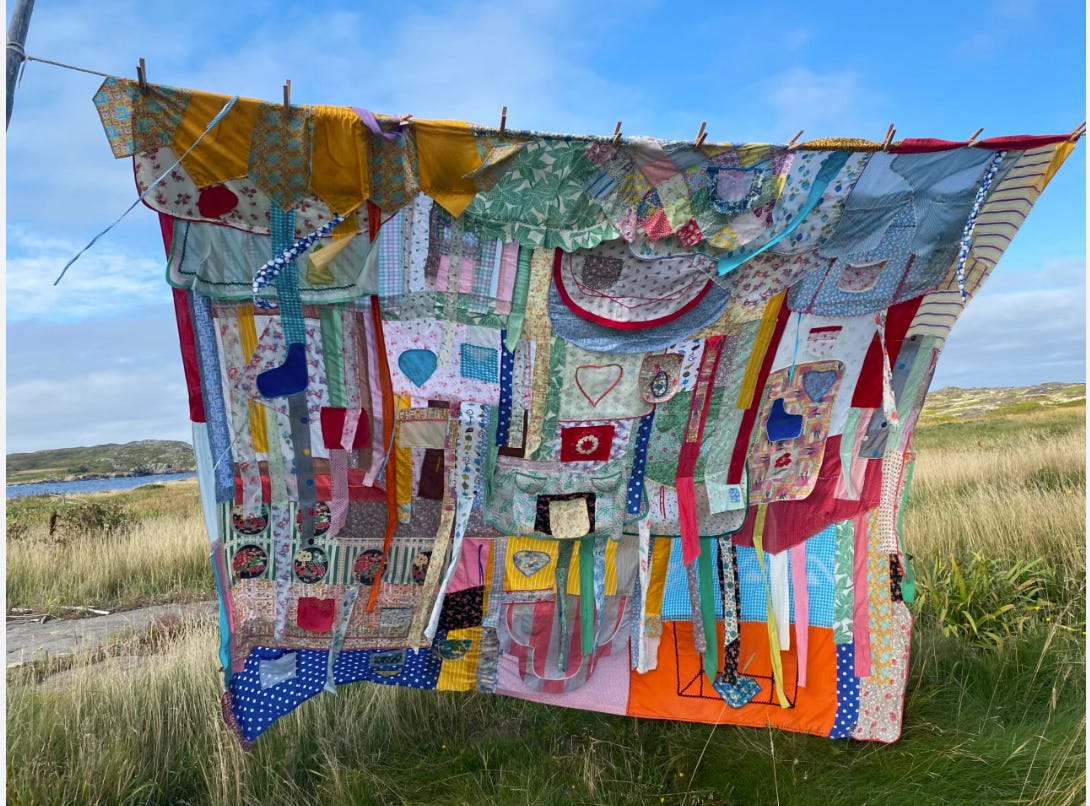
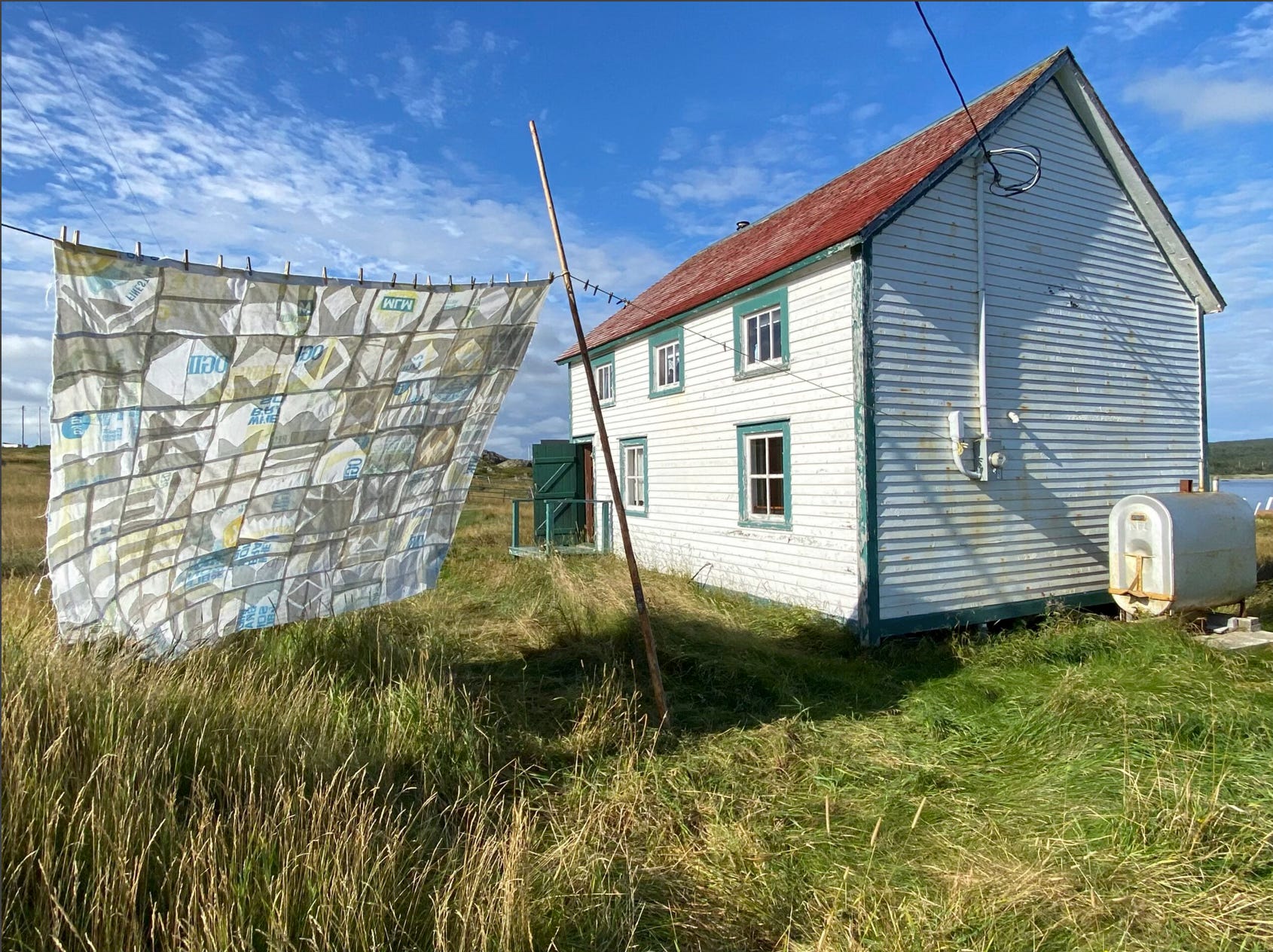
Twenty-five years later, the project re-emerged at the Bonavista Biennale and later on Fogo Island, where Hall projected moving images of her fish-sacks onto large textile surfaces she calls Memory Blankets.
Many viewers regard Reseeding the Dream as a project about cultural heritage. Hall disagrees.
“In fact,” she says, “it’s a philosophical project.”
For Hall, the distinction is crucial. Her interest lies not in preserving history or memory but in questioning their meaning—how communities remember loss and how memory itself becomes a form of knowledge.
The radical practice of unmaking
The pandemic marked a turning point. After completing a vast ten-year encyclopedic project inspired by feminist and Indigenous knowledge systems, Hall felt exhausted. She also began questioning her place within Canadian cultural institutions.
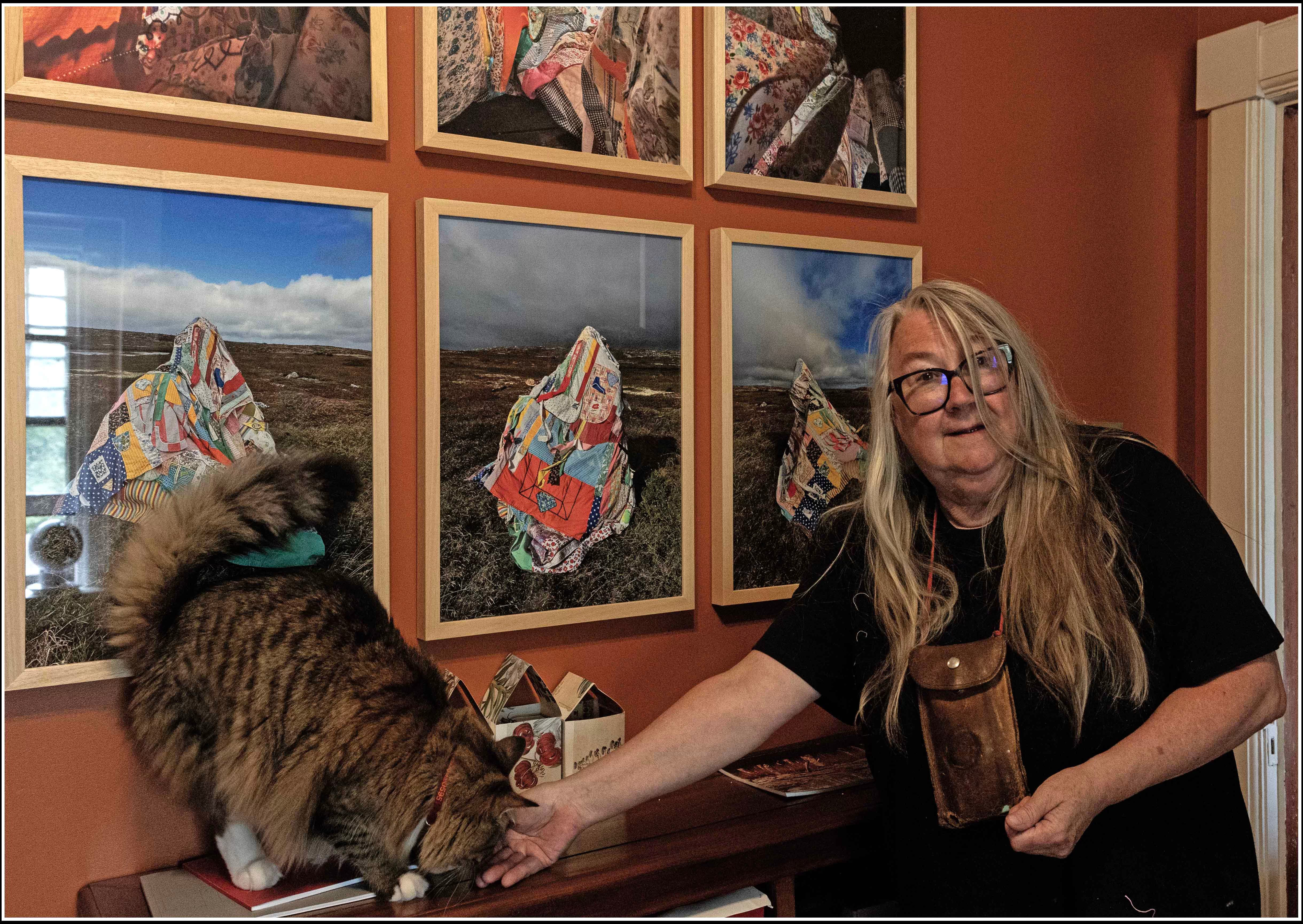
“Perhaps it’s time for me to step aside and make room for younger artists, Indigenous artists, queer artists,” she recalls thinking. So instead of creating something new, she chose to undo something old. Armed with a seam ripper, she carefully dismantled sixty-four of the 150 cod-shaped flour sacks from Reseeding the Dream.
Most artists preserve their masterpieces. Hall chose to take hers apart. The act became meditation, ethical reflection, and philosophical inquiry. It allowed her to revisit old questions, old materials, and old assumptions with fresh eyes.
At a certain point, however, the codfish seemed to demand a new form. The fragments were reassembled into the first of the Memory Blankets—a vast textile surface designed to receive projections of images connected to Newfoundland fishing communities and the collective grief they carry.
What emerged was not simply a new artwork, but a new understanding of the old one. For Hall, unmaking had become a way of thinking.
Memory blankets and the invisible labour of women
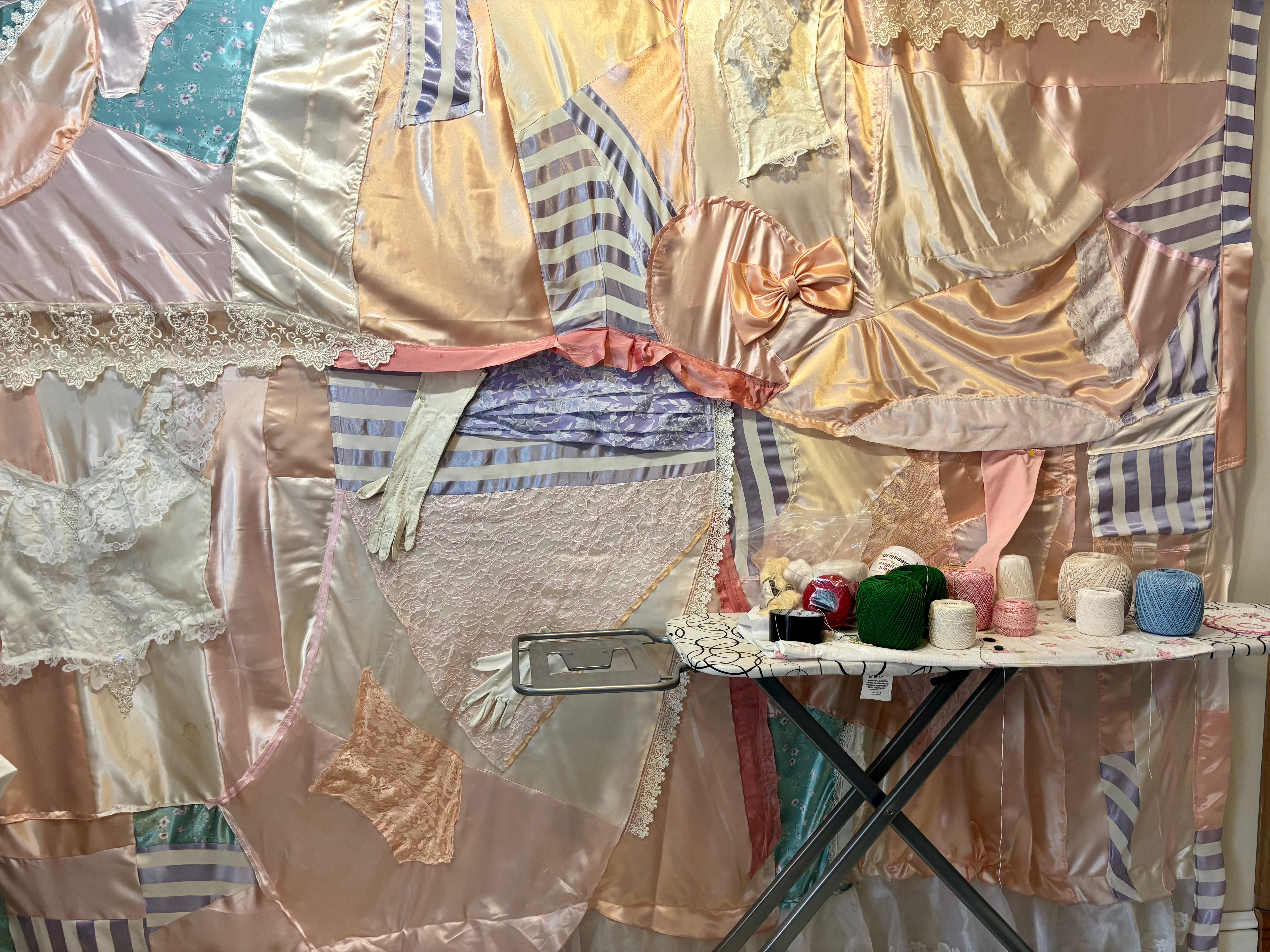
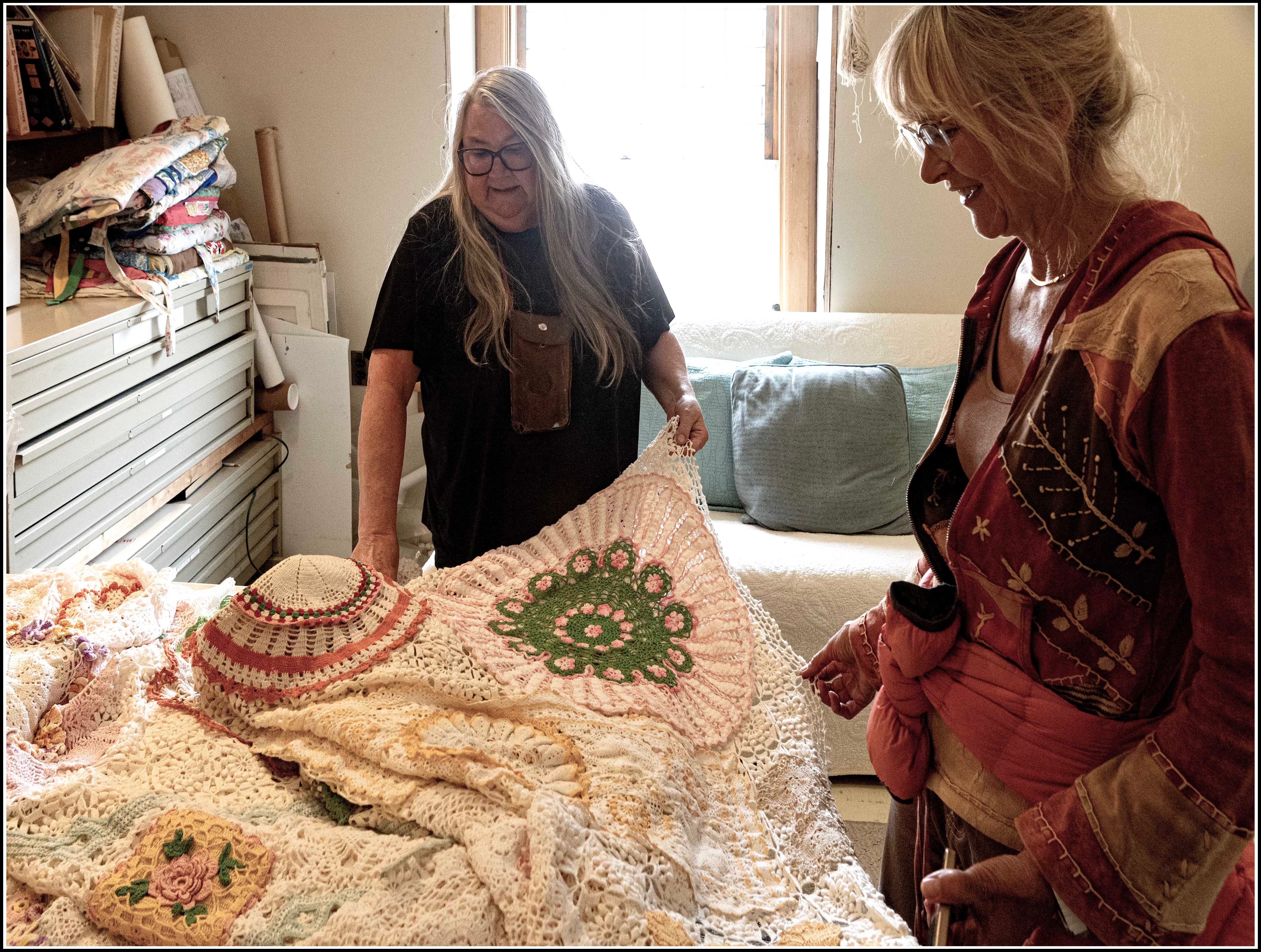
If fishing forms one pillar of Hall’s research, women’s work forms another. Over the past decade, her attention has increasingly turned toward textiles: aprons, embroidered tablecloths, rugs, doilies, bedspreads, and fabrics passed down through generations. Not because they are decorative objects, but because they carry memory. Because they embody labour.
In thrift stores, Hall has often encountered exquisitely hand-embroidered pieces priced at just ninety-nine cents. The experience affected her deeply. “It still brings tears to my eyes,” she admits. “To see all that labour valued at only ninety-nine cents.”
Out of this realization grew a series of monumental textile works that function simultaneously as artworks, archives, memorials, and acts of recovery. One of the most significant examples is Grandmothers’ Blanket, recently acquired by the permanent collection of The Rooms museum in St. John’s.
Nearly three metres square, the work combines embroidery created by women in Hall’s family with pieces made by anonymous women whose labour has often been overlooked or undervalued. “You can’t stand in front of it without realizing that all of this is work,” she says. “And I can no longer tolerate the continual erasure of women’s labour.”
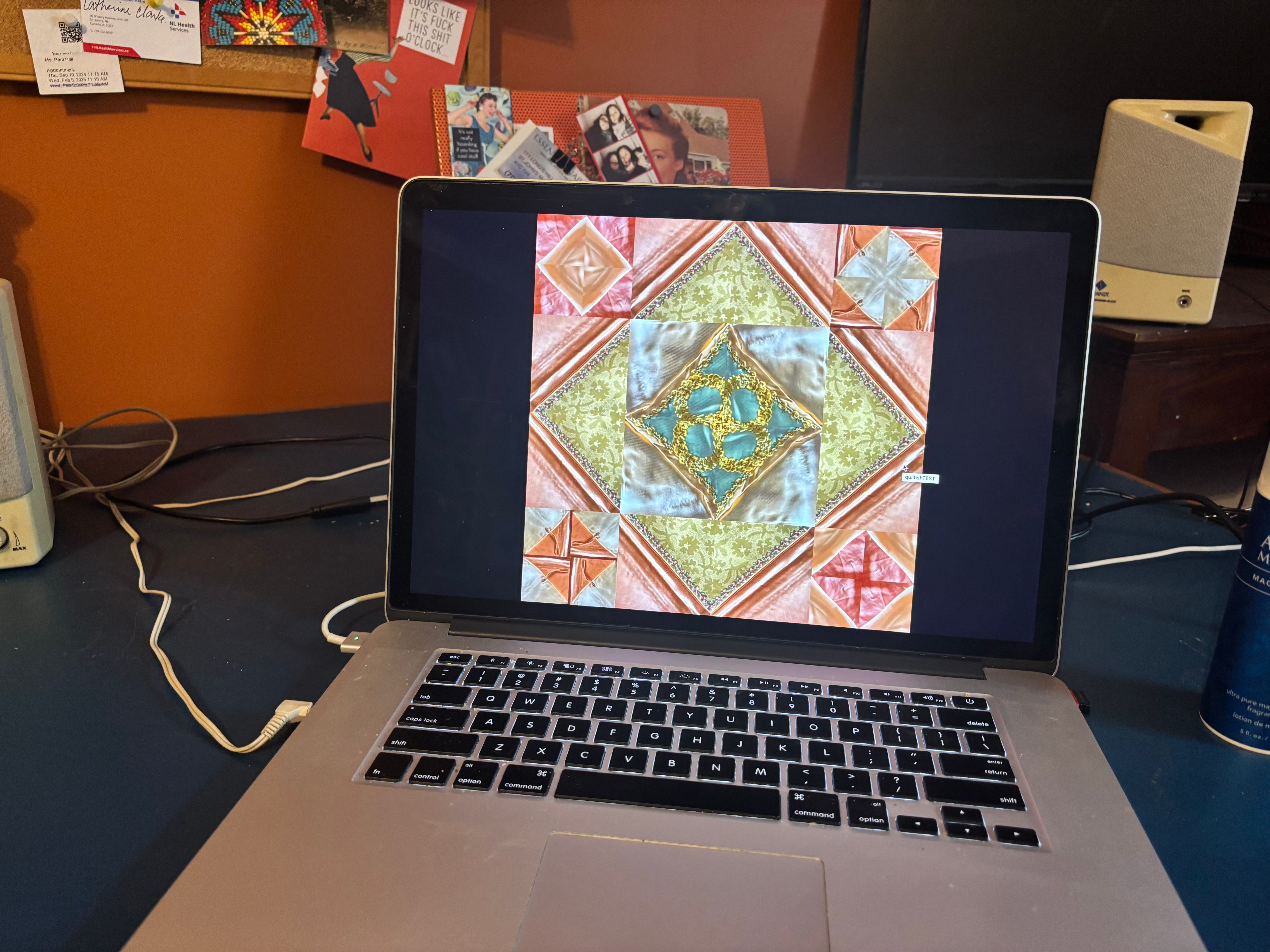
The blanket does not simply preserve the past. It creates a dialogue between generations. As Hall stitches together fragments of other women’s work, she often feels she is learning directly from them. She reproduces decorative motifs, studies techniques, follows patterns, and enters into conversation with hands she has never known.
The blanket becomes archive, classroom, memorial, and conversation all at once.
Against the myth of the solitary genius
Hall’s commitment to reconstruction also extends to ideas of artistic authorship. She has long rejected the Western myth of the isolated artistic genius. “Fishing boats and film sets taught me the value of collaboration,” she says. “It’s no coincidence that both are described as a ‘crew.’”
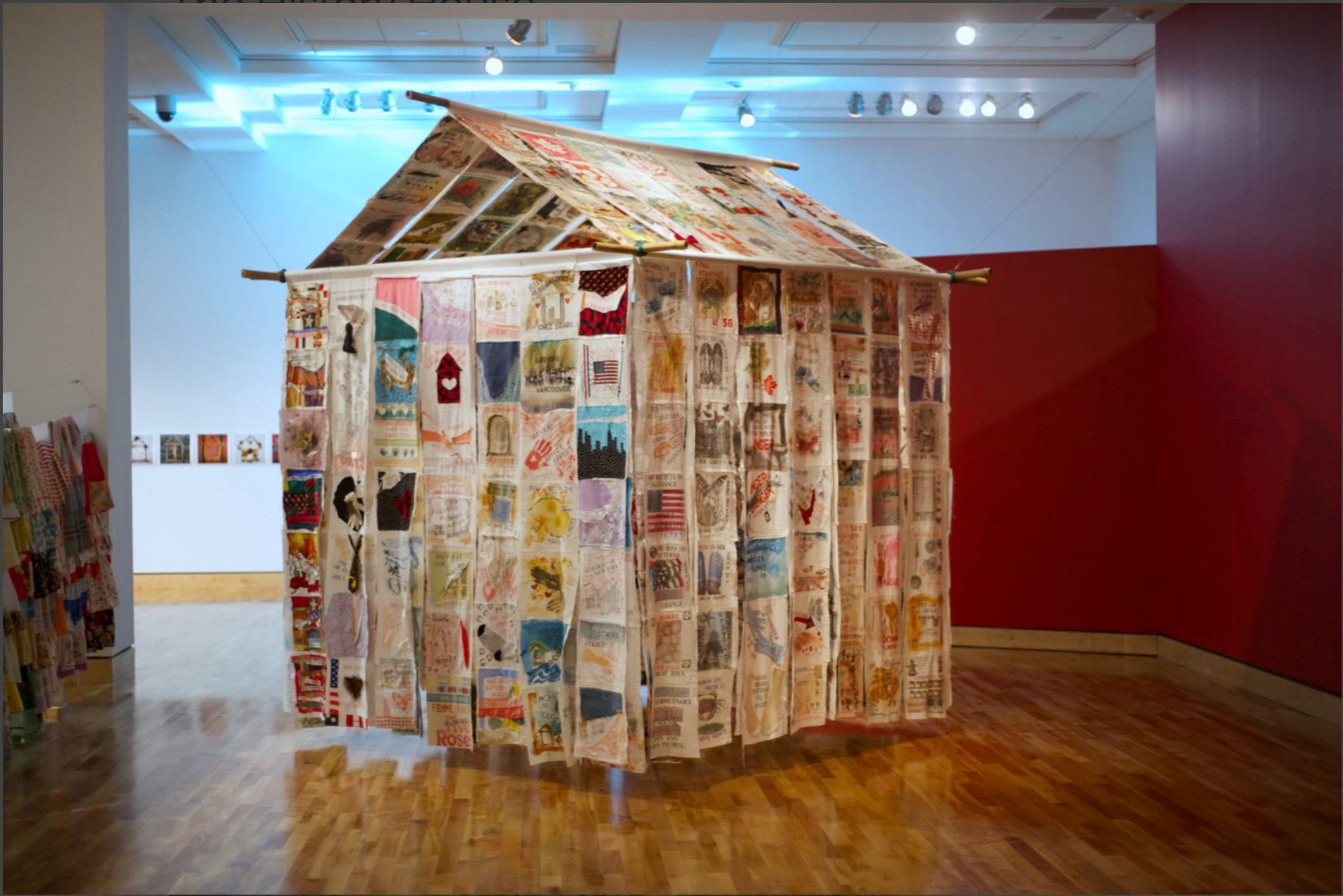
Many of her most ambitious projects have emerged from collective processes and shared authorship. Among them is Marginalia, a long-term collaboration with Vancouver artist Margaret Dragu. For four and a half years, the two artists exchanged a handmade textile square and an email every single day.
By the end of the project, they had created nearly 2,800 textile squares and exchanged more than 1,500 messages. They imagined themselves moving toward one another across Canada, one step per day, from St. John’s to Vancouver.
The project revolved around a deceptively simple question: can art be a reason for friendship? In their case, the answer appears to be yes.
What makes art art?
Throughout her career, Hall has repeatedly questioned the boundaries of art itself. One day, while passing a newly constructed highway in Newfoundland, she noticed a massive cut carved into a granite outcrop. At first glance, she thought it was an extraordinary work of land art.
Ever since, a question has stayed with her: “What makes us think something is art? And what makes us think it isn’t?” These questions led to projects such as Small Gestures, a daily practice of subtle interventions in the landscape: flower petals arranged into words, stones shifted a few centimetres, tiny alterations to the surrounding environment.
For years, Hall photographed these actions and shared them online. Eventually, she stopped. “Why do we need to document everything?” she asks. A gesture can retain its meaning even if it is never shared. Even if no one sees it.
At this stage of her life, Hall seems increasingly comfortable without definitive answers. “If someone thinks it’s art, that’s fine,” she says. “If someone thinks it’s just a blanket, that’s fine too.”
A life spent reassembling the world
Hall likes to describe gardening as “the most interdisciplinary practice there is.”Science, aesthetics, social relationships, physical labour, spirituality, and solitude coexist within the garden. The same could be said of her art.
Whatever material she works with, Hall always returns to the same fundamental gesture: gathering fragments and creating connections. Today she speaks of “using up” her life not as a conclusion, but as an ongoing process of transformation.
Old clothes, inherited textiles, forgotten fabrics, and remnants of past projects continue to find new forms and meanings in her work.
In Pamela Hall’s world, no artwork is ever truly finished. It can always be revisited, dismantled, and reassembled. Just like memory.
Merluzzi e filosofia
La luce del sole estivo filtra nello studio al terzo piano di una vecchia casa di St. John’s. Dalla finestra si vede il giardino in piena fioritura. Pamela Hall, una delle artiste più originali del Newfoundland (Terranova), tiene in mano un taglia-punti, uno di quei piccoli attrezzi di sartoria usati per aprire le cuciture.
Scucire il mondo come gesto creativo
Intorno a lei cumuli di grembiuli, tovaglie ricamate, sacchi di farina, trapunte incompiute. Pamela passa lentamente da un tessuto all’altro. Scuce. Separa. Conserva ogni frammento con cura. Ogni pezzo servirà a costruire qualcos’altro.
È una pratica iniziata durante la pandemia. Fu allora che prese sessantaquattro sacchi di farina a forma di merluzzo, cuciti decenni prima per un altro progetto artistico, e iniziò a smontarli. Punto dopo punto. Quadrato dopo quadrato. “Mentre tutti facevano il pane con il lievito madre”, dice ridendo, “io disfacevo quello che era già stato creato”
Per Pamela, disfare non è distruggere, è un modo per interrogare il mondo. Da oltre quarant’anni il centro della sua ricerca è capire come nasce la conoscenza attraverso il ricordare, il recuperare, il decostruire e il ricostruire. Per lei la memoria non è qualcosa che si conserva. È qualcosa che si costruisce.
Chi decide che cos’è conoscenza?
“Chi stabilisce cosa sia la conoscenza e chi ha il diritto di produrla?”. La domanda attraversa da sempre il suo lavoro. “Sono femminista”, dice Pamela, “mi frustrano secoli di definizioni della conoscenza elaborate dagli uomini e l’idea che la conoscenza debba necessariamente esistere sotto forma di testo”.
La sua non è mai stata una critica puramente teorica. Nel corso della sua carriera Hall ha costruito un modo alternativo di produrre sapere, fondato sulla cultura visiva, sull’esperienza vissuta, sulla collaborazione e sul lavoro manuale. Per lei arte e ricerca sono inseparabili. “È il mio modo di investigare”, spiega. “È così che indago il mondo ed è così che arrivo a delle conclusioni. E quando scopro qualcosa che ritengo interessante, la restituisco al mondo.”
Questo approccio spiega anche perché, nel corso della sua carriera, Hall non si sia mai lasciata definire da un unico linguaggio espressivo né abbia seguito un percorso lineare. Non parte mai da una forma d’arte. Parte dalle persone a cui intende rivolgersi. “Se voglio parlare a donne che stanno affrontando un intervento chirurgico, realizzo un film”, dice. “Se voglio parlare ai bambini dell’ambiente, scrivo un libro per ragazzi”.
Il risultato è un corpus di opere multiforme che comprende film, installazioni pubbliche, progetti di ricerca enciclopedici, lavori tessili, performance, collaborazioni comunitarie e libri. Una straordinaria varietà di linguaggi che ha però un unico filo conduttore: rendere la conoscenza accessibile, condivisa e radicata nell’esperienza concreta.
Dai merluzzi alla filosofia
Molte delle opere più importanti di Pamela nascono da anni – talvolta decenni – di paziente osservazione e ricerca sul campo. Negli anni Novanta, trascorse quattro anni a lavorare a bordo delle imbarcazioni della pesca costiera al merluzzo: voleva documentare la vita delle comunità del Newfoundland devastate dal collasso dell’industria ittica. «Una cosa è perdere il lavoro», riflette. «Un’altra è perdere il proprio modo di vivere».
Da quell’esperienza nacque uno dei suoi progetti più celebri, Reseeding the Dream (Riseminare il sogno). Realizzata nel 1997, l’opera prevedeva il volo di centocinquanta sacchi di farina a forma di merluzzo sopra i campi di grano dell’Alberta. Giocando sul richiamo biblico della divisione dei pani e dei pesci, Reseeding the Dream diventava un ponte simbolico tra la crisi della pesca del Newfoundland e la cultura cerealicola delle praterie canadesi.
Venticinque anni più tardi, il progetto è riapparso alla Biennale di Bonavista e successivamente a Fogo Island, dove Pamela ha proiettato immagini in movimento dei suoi pesci-sacco su grandi superfici tessili che chiama Memory Blankets (Coperte della memoria). Per molti Reseeding the Dream è un progetto dedicato al patrimonio culturale. Pamela dissente. «In realtà», dice, «è un progetto filosofico».
Per Pamela è una distinzione fondamentale. Il suo interesse non è preservare la storia o la memoria quanto interrogarsi sul suo significato, su come le comunità ricordino le proprie perdite e sul modo in cui la memoria stessa diventi una forma di conoscenza.
La pratica radicale del disfare
La pandemia rappresentò un punto di svolta. Dopo aver completato un vasto progetto enciclopedico durato dieci anni ispirato ai sistemi di conoscenza femministi e indigeni, Pamela si sentiva provata. Cominciava anche a interrogarsi sul proprio ruolo all’interno delle istituzioni culturali canadesi.
«Forse è venuto il momento di farmi da parte e lasciare spazio agli artisti più giovani, agli artisti indigeni, agli artisti queer», ricorda di aver pensato. Così invece di produrre qualcosa di nuovo, decise di disfare qualcosa di vecchio. Armata di taglia-punti, scucì 64 dei 150 sacchi di farina a forma di merluzzo di Reseeding the Dream. La maggior parte degli artisti conserva gelosamente i propri capolavori, lei scelse di disfare i suoi. Quel gesto divenne meditazione, riflessione etica, indagine filosofica. Le permise di tornare, con occhi nuovi, su vecchie domande, vecchi materiali e vecchie ipotesi.
A un certo punto, però, quei merluzzi sembravano reclamare una nuova forma. I frammenti furono riassemblati nella prima delle Memory Blankets – un’enorme superficie tessile destinata a ricevere proiezioni di immagini legate alla pesca nel Newfoundland e al lutto collettivo che esse custodiscono.
Quello che emerse non era semplicemente una nuova opera d’arte, ma una nuova comprensione di quella precedente. Per Pamela, il disfare era ormai diventato un modo di pensare.
Le coperte della memoria e il lavoro invisibile delle donne
Se la pesca costituisce uno dei pilastri della ricerca della Hall, il lavoro femminile ne rappresenta un altro. Nell’ultimo decennio, la sua attenzione si è sempre più rivolta ai tessuti: grembiuli, tovaglie ricamate, tappeti, centrini, copriletti e stoffe tramandati di generazione in generazione.
Non in quanto oggetti decorativi, ma perché custodiscono memoria. Perché incorporano il valore del lavoro. Nei negozi dell’usato, Pamela si è spesso trovata davanti a ricami fatti a mano di straordinaria fattura venduti per appena novantanove centesimi. La cosa l’ha colpita profondamente. “Mi vengono le lacrime agli occhi ancora oggi”, confessa. “Dare a tutto quel lavoro il valore di soli novantanove centesimi”. Da questa consapevolezza è nata una serie di grandi opere tessili che sono allo stesso tempo opere d’arte, archivi, memoriali e atti di recupero. Uno degli esempi più significativi è Grandmothers’ Blanket (La coperta della nonna), recentemente entrata nella collezione permanente del museo The Rooms a St. John’s.
Un quadrato di quasi tre metri per lato, l’opera combina ricami realizzati dalle donne della famiglia Hall con pezzi realizzati da donne anonime il cui lavoro è stato spesso ignorato o sottovalutato. «Non puoi starle davanti senza renderti conto che tutto questo è lavoro», dice. «E io non posso più sopportare che il lavoro delle donne venga costantemente cancellato».
La coperta non si limita a conservare il passato. Crea un dialogo tra generazioni. Mentre la Hall cuce insieme frammenti del lavoro di altre donne, sente spesso di imparare direttamente da loro. Riproduce motivi decorativi, studia tecniche, segue schemi, entra in dialogo con mani che non ha mai conosciuto. La coperta diventa insieme archivio, aula, memoriale e conversazione.
Contro il mito del genio solitario
L’impegno della Hall per la ricostruzione si estende anche alle idee sull’autorialità artistica. Da sempre rifiuta il mito occidentale dell’artista-genio isolato. “I pescherecci e i set cinematografici mi hanno insegnato il valore della collaborazione”, racconta. “Non è un caso che per entrambi si parli di “crew” (in inglese, di un “equipaggio”, cioè di una squadra)”.
Molti dei suoi progetti più ambiziosi sono nati da processi collettivi e da forme di autorialità condivisa. Tra questi spicca Marginalia, una lunga collaborazione con l’artista di Vancouver Margaret Dragu. Per quattro anni e mezzo le due artiste si sono scambiate ogni giorno un quadrato tessile realizzato a mano e un messaggio di posta elettronica. Alla conclusione del progetto avevano prodotto quasi 2.800 quadrati e oltre 1.500 messaggi. Immaginavano di avanzare l’una verso l’altra attraverso il Canada, un passo al giorno, da St. John’s a Vancouver. Il progetto ruotava attorno a una domanda apparentemente semplice: l’arte può essere una ragione per l’amicizia? La risposta, nel loro caso, sembra essere affermativa.
Cosa rende arte l’arte?
Spesso, nella sua carriera, Hall ha interrogato i confini stessi dell’arte. Un giorno, passando vicino al cantiere di una nuova autostrada nel Newfoundland, notò un enorme taglio scavato nella roccia granitica. Ricorda di averlo scambiato inizialmente per un’imponente opera di land art.
Da allora una domanda continua ad accompagnarla: “Che cosa ci fa pensare che qualcosa sia arte? E che cosa ci fa pensare che non lo sia?”
Da questi interrogativi sono nati progetti come Small Gestures, una pratica quotidiana fatta di piccoli interventi nel paesaggio: petali disposti a formare parole, pietre spostate di qualche centimetro, minime alterazioni dell’ambiente circostante. Per anni Hall ha fotografato e condiviso questi gesti online. Ma a un certo punto ha smesso.
“Perché dobbiamo documentare tutto?”, si chiede. Un gesto mantiene il suo significato anche se non viene condiviso. Anche se nessuno lo vede. In questa fase della vita, la Hall sembra essersi liberata dall’esigenza di trovare risposte definitive. “Se qualcuno pensa che sia arte, benissimo”, dice. “Se qualcuno pensa che sia semplicemente una coperta, va bene lo stesso”.
Una vita spesa a ricomporre il mondo
Pamela ama definire il giardinaggio «la pratica più interdisciplinare che esista». Scienza, estetica, relazioni sociali, lavoro fisico, spiritualità e solitudine convivono nello spazio del giardino. Lo stesso si potrebbe dire della sua arte.
Qualunque sia il materiale con cui lavora, Hall ritorna sempre allo stesso gesto fondamentale: raccogliere frammenti e creare connessioni.
Oggi parla di “consumare” la propria vita non come di una conclusione, ma come di un processo continuo di trasformazione. Vecchi abiti, tessuti ereditati, stoffe dimenticate e resti di progetti passati continuano a trovare nuove forme e nuovi significati nelle sue opere.
Nel mondo di Pamela Hall, nessuna opera è mai davvero conclusa. Può essere ripresa, smontata, ricomposta. Come la memoria.
Fascinating perspectives from Pamela Hall. Her approach to art and philosophy, her general questioning, all worth emulating.